Saturday, January 22, 2011

Intriguing headline: "Arctic Ocean Getting Warm; Seals Vanish and Icebergs Melt"

From The Washington Post:
The  Arctic ocean is warming up, icebergs are growing scarcer and in some  places the seals are finding the water too hot, according to a  report to the Commerce Department yesterday from Consulafft, at  Bergen, Norway.  Reports from fishermen, seal hunters and explorers  all point to a radical change in climate conditions and hitherto  unheard-of temperatures in the Arctic zone.  Exploration expeditions  report that scarcely any ice has been met as far north as 81 degrees,  29 minutes.
Soundings to a depth of 3,100 meters showed the  gulf stream still very warm.  Great masses of ice have been replaced  by moraines of earth and stones, the report continued, while at many  points well known glaciers have entirely disappeared.
Very  few seals and no white fish are found in the eastern Arctic, while  vast shoals of herring and smelts which have never before ventured  so far north, are being encountered in the old seal fishing grounds.  
Within a few years it is predicted that due to the ice  melt the sea will rise and make most coastal cities  uninhabitable.
Oops!   Never mind.  This report was from November 2, 1922, as reported by  the Associated Press and published in the Washington Post -- 88 years ago, and currently in the Library of Congress archives with the fascinating story behind it. The reality of global warming, while critical today, was evidently apparent years ago.

(With thanks to Mike Harlick who passed this on to me.) 

Saturday, January 15, 2011

Tea Time

Earlier this month, slate.com posted a piece by Christopher Hitchens on tea (actually he was commenting on Yoko Ono’s tribute to her husband, in which she recalled that they often made tea together).
“Just after World War II, during a period of acute food rationing in England, George Orwell wrote an article on the making of a decent cup of tea that insisted on the observing of 11 different "golden" rules.  Some of these (always use Indian or Ceylonese – i.e., Sri Lankan – tea; make tea only in small quantities; avoid silverware pots) may be considered optional or outmoded.  But the essential ones are easily committed to memory, and they are simple to put into practice.
“If you use a pot at all, make sure it is pre-warmed.  (I would add that you should do the same thing even if you are only using a cup or a mug.)  Stir the tea before letting it steep.  But this above all:  "[O]ne should take the teapot to the kettle, and not the other way about.  The water should be actually boiling at the moment of impact, which means that one should keep it on the flame while one pours."  This isn't hard to do, even if you are using electricity rather than gas, once you have brought all the makings to the same scene of operations right next to the kettle.
“It's not quite over yet.  If you use milk, use the least creamy type or the tea will acquire a sickly taste.  And do not put the milk in the cup first – family feuds have lasted generations over this – because you will almost certainly put in too much.  Add it later, and be very careful when you pour.  Finally, a decent cylindrical mug will preserve the needful heat and flavor for longer than will a shallow and wide-mouthed – how often those attributes seem to go together – teacup.  Orwell thought that sugar overwhelmed the taste, but brown sugar or honey are, I believe, permissible and sometimes necessary.”
This brought back warm memories of my very early years when my parents had tea umpteen times a day (Dad was English; Mum, Canadian. And we had lived in Columbo, Ceylon (now Sri Lanka) in the late ‘30s. Dad being an early riser would bring Mum her cup first thing in the morning, in bed. As I recall tea was drunk mid-morning, for lunch, late afternoon before a pre-dinner sherry, in the evening before bed. The tea pot was always pre-warmed, loose tea used (Orange Pecoe and Pecoe, from Ceylon, naturally) - - tea-bags were never tolerated, steeped just so long with a tea-cosy keeping the pot warm, strained, just the right amount of milk and sugar added, thank you. To make a good cuppa was an art.

Many years later, in the hills of Korea while attached to a British Army unit, at a break a large can (someone in the section always had a beat up rather grubby one tied to his small pack) would appear, water brought to boiling, a handful of tea thrown in, a bit more of a boil, then off the fire and a dash of cold water thrown in to settle the leaves, and you had your tea.


Actually, I never liked tea.


Sunday, January 9, 2011

January 8, 2011


Photo: Thanks to the Rev. Suzi Robertson, Vicar
Good Samaritan Episcopal Church,
Sammamish WA

Saturday, January 8, 2011

Scanning the Globe

After a nice week of crystal clear skies, yet cold, a time when one could look from the Kingston-Edmonds ferry at sails tacking across this southern end of the Salish Sea (aka Puget Sound), enjoying great frost-bite sailing. But now the weather has moved in with grey skies, and rain. Though a bit warmer, snow is forecast mid-week. Time to hunker down with a warm stove and get comfy writing those Christmas thank-you notes and finishing up those cartons of eggnog.


A few posts ago, December 5th, 2008, to be exact, I wrote about the Automatic Identification System, or AIS as it is more commonly called. In a nutshell, it's a radio system, and being a radio system it can see "vessels" when you or your radar cannot. Overlaid on your plotter, it shows vessels that "are just around the corner", thus giving you time to make course corrections. You can read more on this by going to the archives to the left and clicking on 2008, December, 5th. A great safety device, as well as a fun one to monitor when at anchor. You get all sorts of information about the vessels you "see" - - you "see" the vessel's name; if it is "at anchor", "underway using engine", or "not under command"; type of ship and cargo; tonnage; dimensions; speed and course over ground; call-sign; MMSI; and destination, and when it will get there. I did notice that military vessels don't say much of anything on their icon, something akin to sailors and soldiers wearing camouflage uniforms in Starbucks (Hey, I can see you!).


AIS is becoming more popular, with some larger recreational vessels now transmitting their information while the rest of us just "read" what they're saying.


And when at evening anchor, calmly nursing a cool glass of wine, it doesn't bother me one bit when my wife and traveling companions kid me as I sit tracking vessels on my plotter. "Look, there goes the B.C. Ferry "Spirit of Vancouver Island" leaving Tsawwassen. And there's the tug "Intrepid III" with a tow, just rounding Moresby Island." Wow, just another form of mariner relaxation.


But now you can go even global, thanks to the creative work of the University of the Aegean in Mytilene, Greece.  Those lads and gals of the Department of Product and System Design Engineering have wonderfully created and host a world-wide AIS, Marine Traffic.com from which you can track vessels all over the globe. Right now, as I write this post, their page shows 20,461 vessels being tracked.


A great way to pass the time, a sort of nautical "Where's Elmo?", as you're  hunkered down and waiting for clearer skies and calmer seas.


And if you haven't yet done so, check out AIS for your own vessel. I got mine through Milltech Marine, a local Northwest company with great service and support.


Thanks to Mike Harlick and Rod Scher (author, The Annotated Sailing Around the World) who separately introduced me to the University of the Aegean site (which is also a hint asking you for your ideas for this blog . . .). 

Thursday, December 23, 2010

Setting a New Course

January was named for the Roman god Janus, the protector of gates and doorways. He was pictured as two-headed, with both heads bearded; one head looked forward while the other looks aft, with a retrospective view.


A few weeks ago fellow boaters and friends came ashore for dinner with us. As the evening drew on, and being faithful readers of this blog, they asked, "So, what is this blogger's block you last mentioned all about?" As I stumbled to come up with an appropriate response, John added, "What I really like are the comments and the ideas you mention, not necessarily the 'how to' stuff" (or words to that effect). Gives one pause. Not being an editor of Chapman's Piloting I may well be burned out on the 'how to' stuff.


So a new course is set as we look forward like Janus, one which continues nautical matters, but also veers at times to touch on other interests, as the description of the blog at the top of the page suggests. A new course with a new name: "Aft Deck Musings . . . ." A new course with a new name and now more folk joining this cruise as new addressees join  greatly increasing the current 400+ viewers currently receiving (and hopefully, reading) this blog.


But, and this is very important, our well respected CruiseMasters Boating Instruction program is still very much alive and on course. Almost 600 boaters have taken this program since it started thirteen years ago; that's 1,252,100 client/hours of instruction! Click on the web site to the left to find out a lot more about CruiseMasters.


So, Happy New Year, and here's to our new heading!


I hope you enjoy it.


Photo: moored at Ganges, Salt Spring Island, B.C., 2006

Friday, October 15, 2010

It's Been A long, Long Time


A six-week cruise (on asphalt, not water this time) covering 6,999.0 miles port to port (too tired to go around the block for that final mile) and covering Yellowstone, Grand Tetons and Jackson, WY; Steamboat Springs, CO; Lincoln, NE; Nashville, TN; Santa Fe, NM; Sedona and Grand Canyon, AZ; and Bryce Canyon and the Great Salt Lake, UT.


An equal time catching up at home and decelerating, plus jumping in with patient new clients for CruiseMasters Boating instruction.


 And the world goes on and happenings happen since my last posting on June 4th.


The disastrous Gulf Oil leak has been stopped, but the disaster, easily forgotten beyond the Gulf, lingering on for how many more lives and years . . . People for Puget Sound's wonderful and dynamic executive director Kathy Fletcher announcing her retirement next year as that influential public advocacy group celebrates it's 20th  . . . that organization's efforts to have Smith and Minor Islands (off the west side of Whidbey Island) named as a state aquatic reserve made official this week with a signing ceremony in Coupeville, with Protection Island now in their sights as a next aquatic reserve designation . . . the boat brokerage business struggling upward but still very soft . . . the Salish Sea designation becoming more popular with boaters and cartographers . . . Loran-C officially dead, we were one of the last areas closed down . . .


A new Orca calf born in August to L pod, part of the southern resident population which makes the San Juan's their home . . . new federal regulations on the horizon to further protect the whales, with fines likely to be 30 to 40 times those of the state . . . for the 2011 boating season boats also may be banned from within 200 yards (currently 100 yards) of the whales . . . the entire west side of San Juan Island (where the 87 resident whales spend the majority of their time) possibly off-limits in the near future to all boaters . . .


Apple's iPad and iPhone4, bought in Nashville and Salt Lake City, respectively, now integral fixtures of this Mac-prone family . . . a second iPhone 4 making its appearance when the first went (groan!) overboard into Poulsbo's Liberty Bay . . .


Argosy Cruises' venerable MV Kirkland, a restored 1924 wooden-hulled car ferry with a fine history on the Columbia River and later on Puget Sound before being converted to a tour boat plying Lake Washington, caught fire last month and is now beyond restoration . . . the large chamber at the "Locks" opening and closing (on a very limited scale) by hand after being struck by lightning . . . US Navy's statement that "a confluence of factors" apparently came into play although "we cannot definitely say that the USS Port Royal caused the incident", explaining the ship's wake that destroyed thousands of oysters that were washed up high and dry on Hood Canal beaches two months ago . . .


And most recently, and personally very frustratingly: "blogger's block"; How do you restart a blog after almost a half year's silent absence from the pathways of cyberspace . . .


Yes, we're still here, enjoying this unusual warm weather while awaiting La Niña . . . Are you still out there?

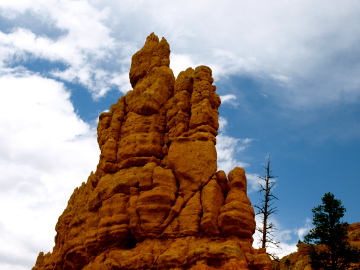
Photo: At the Red Valley, on the way to Bryce Canyon UT

Friday, June 4, 2010

World Environmental Day, or is it?


Random thoughts from the aft deck.


Tomorrow, Saturday, is World Environmental Day.

But it is also a day of downers with the big oil gusher in the Gulf still spewing with little promise of an end in sight, at least not right now for the sea creatures and the birds and the coastal marshes and lands, let alone the folk who live and work on those shores. Irresponsible criminality doesn't even come close to describing what lies behind (underneath?) this. Perhaps corporate hubris on a giant scale comes closer.

Looking at charts of the spill in far away waters, with little reference to scale, doesn't quite carry the devastating impact.

Want to make it closer to home?


Thanks to People for Puget Sound's Facebook posting, "Visualizing the BP Oil Disaster" you can do just that. Click on Location (just above the chart), enter Seattle (or anywhere else you'd like), then click on Move The Spill and you'll get a sense of what this would mean if it happened here (or elsewhere).


To be sure, a downer of a way to end a week. But for many Gulf shore folk, not to mention all those Gulf critters who use to fly and swim and crawl, this week has been their end, literally.


Wonder when we'll learn . . . 


Photo: A seabird covered in oil wades in the surf at East Grand Terre Island along the coast of Louisiana, June 3.

Thursday, May 27, 2010

A Memorial Day


The honoring of those who were killed in our wars has a special place for me, as it must do for countless others. Though frankly, I have some difficulty in saying that "they gave their lives"; I'm not sure that was their intent when they joined and went to war. Going into action was a way of defending values and causes, and if this meant that you were injured or killed, that was the cost. But of all the men (there were no women in combat then) I've served with, I can't say that they joined the Forces to "give their lives".


Which is all the more the reason to honor them.


For many years the time of honoring was the eleventh hour of the eleventh day of the eleventh month, the day that the Armistice was signed ending the so-called Great War in 1918. As a youngster growing up in California years later, that was the day the Legion handed out poppies (remember Flander's Field?) and solemn ceremonies were held at the town's cenotaphs as wreaths were laid and vets remembered their chums and toasted them well into the night at  Legion halls across the land.


Memorial Day has an interesting history, staring in the mid-1800's as a remembering of the Confederate soldiers who died in the Civil War. And it well may have started with formerly enslaved blacks who created a Confederate cemetery from a mass grave to individual grave sites in Charleston, North Carolina, and marked May 1, 1865 as the first memorial, or 'Decoration' day. It wasn't until 106 years later, in 1971, that Memorial Day became a nation-wide observance and a federal holiday, reaching beyond the South to all of the USA, to be observed on the last Monday of May each year.


An unique side-bar, at least for Canadians, is that Newfoundland and Labrador also have a Memorial Day. During the First World War Newfoundland was a largely rural Dominion of the British Empire with a population of 240,000,  not yet part of Canada. The Royal Newfoundland Regiment was deployed first in Gallipoli, and at the end of that campaign the regiment spent a short period recuperating before being transferred to the Western Front in March 1916. In France, the regiment regained battalion strength in preparation for the Battle of the Somme. The infantry assault was to began on July 1, 1916 and at 8:45 a.m. the Newfoundland Regiment received orders to move forward. All the officers and slightly under 658 other ranks became casualties. Of the men who went forward only 68 were available for roll call the following day. For all intents and purposes the Newfoundland Regiment had been wiped out, the unit as a whole having suffered a casualty rate of approximately 90%.


The province of Newfoundland and Labrador observes Memorial Day during the morning of July 1 (now Canada Day) at the National War Memorial in St. John's and at the cenotaphs around the province, flying the Union Flag at half staff, and in the afternoon and that evening celebrates Canada Day with the rest of the Canada, of which they became a  province in 1949.


Be it an Army of the Confederacy memorial, a memorial of the United States forces in the Great War and World War II, a memorial of those who fell in Korea (which was my war), in Viet Nam, in the Middle East, and in all of those conflicts small and large of recent memory, we do them a grave injustice if we do not remember their dying. We perhaps do ourselves an even greater injustice if we do not remember, humbly and not with noisy and hollow bravado, what those thousands and thousands of deaths meant.


For many, Monday will be simply part of a three day weekend, and three day weekends play an important part in the our  hectic and oh-so-busy daily lives. But it would be good for each of us if we but took a moment to reflect what this Monday is really about, to center in for a moment of time, to reflect on why we even have this particular Monday and what it may, what it can mean for each of us and our common humanity on this fragile island planet we call our Earth.


Lest we forget . . . . .


Photo: the National War Memorial, St. John's, Newfoundland

Friday, April 30, 2010

BP's Gulf Oil Spill


Thanks to Mike Sato, People for Puget Sound's great director of communications, for passing on this web site that is up to the minute on the Gulf oil situation:


Thursday, April 15, 2010

How It All Started


From today's delancyplace daily email, a bit of history to enlighten your “Tax Day”. 


Faced with the unprecedented cost of the Civil War, the U.S. implements an income tax:

"With steady news of the Union's defeats in 1861, public confidence fell sharply. ... Adding to [Abraham] Lincoln's concerns, the Treasury secretary [Salmon Chase] reported that he had underestimated the cost of the war for 1861-62. Rather than $318 million, Chase now put the figure at $532 million. And only $55 million in taxes was expected.

"The Union army's defeat at Bull Run in July 1861 cooled the desire of banks to lend to the government. Chase and congressional Republicans decided they must raise taxes aggressively to produce more revenues to reassure investors. They first considered a property tax, a method last used in the War of 1812 ... [but] the suggestion evoked a sharp reaction from populist and agrarian interests ... [and] intense congressional opposition led to a search for a tax that would be considered fairer by rural constituencies. Legislators were aware of the various features of the British income tax, which had first been proposed by William Pitt the Younger in 1798 to pay for weapons and supplies in preparation for the Napoleonic Wars with France. Implemented in 1799, the tax featured graduated payment rates, with the lowest set below 1 percent and the highest at 10 percent.

"The idea of a federal income tax was widely regarded as radical and nearly inconceivable. Those suspicious of any increase in federal financial power considered it another attempt by the federal government to undermine the power of the states. Wealthy Americans deplored it as an unjust and heavy-handed federal intrusion. ... [However,] in need of revenues and anxious to offset grumblings that low-income farmers and workers were bearing the brunt of the war's cost due to high tariffs, the [Congress] passed legislation levying ... a 'flat' 3 percent on incomes above $800 signed into law by President Lincoln on August 5, 1861. Most Americans made far less than $800 - the average annual income that year was $150 - so the vast majority did not have to pay the tax. ... Interest on mortgages was made deductible ... Congress attempted to increase tax fairness further, as well as obtain additional revenues, by including in the bill an inheritance tax - the first in U.S. history - on estates in excess of $1,000.

"To improve tax collection, Congress adopted another practice from Britain called 'collection of revenues at the source.' ... It required federal agencies to withhold taxes from the pay of civilian and military employees and railroad and financial institutions to withhold taxes before distributing dividend and interest payments to investors."

(Robert D. Hormats, The Price of Liberty, Times Books, 2007, pp. 63–69)

So now you know how today all started. Have a nice day!